
“Total genuine” is a claim. A paint gauge is a measurement.
In our published field study, 13 of 34 inspected cars showed the classic front-hit tell — a damaged or repaired cross member — and most looked clean from the outside. Here’s exactly how accident cars are disguised in Pakistan, and how they’re caught.
From PKR 2,500 · Lahore doorstep · Same-day report in most cases
How accident cars are made to look clean
Fresh paint over filler
The classic. Dent the panel, fill it, sand it, respray — invisible to the eye within a day. The paint gauge reads it instantly: factory paint is ~4–6 mils; our published findings include a “genuine paint” roof reading 39.1 mils. That’s not paint, that’s bodywork.
Panel replacement
A damaged door or fender is swapped with a used one and blended in. Tells: bolt-head witness marks, mismatched panel gaps, sealant that doesn’t match the factory pattern, and paint readings that differ panel-to-panel.
The showroom shine
Polish, dressing and a deep-cleaned engine bay make a hard-lived car feel loved. None of it changes what the structural points underneath say — which is why we check the points polish can’t reach.
“Total genuine hai”
The most repeated sentence in Pakistan’s used-car market. Sometimes true. But the seller may genuinely not know — the repair could be two owners old. The phrase is a claim; the paint gauge is a measurement.
Two panels, same car, one truth
From our public sample report — the same gauge, minutes apart. One panel is factory. One has a story.
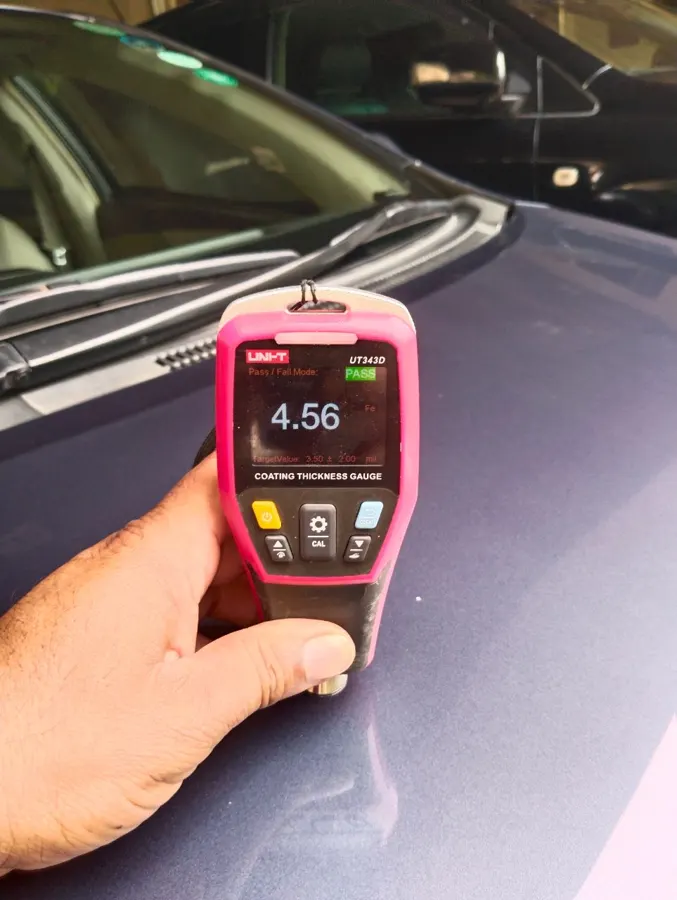
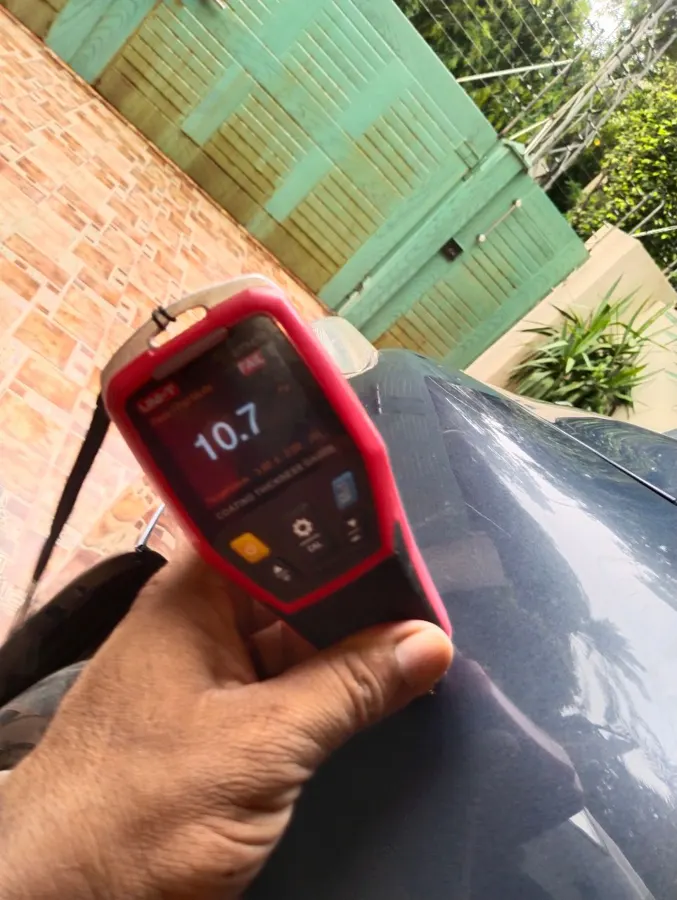
The extreme case in our findings: a roof sold as “original paint” reading 39.1 mils — about nine times factory. That’s filler.
Where the structure keeps its receipts
Paint can be redone perfectly. Structure is much harder to fake — welds, kinks and witness marks survive every respray. These are the points our two mechanics check on every car, and where our damage heat map says cars hide it most.
- Front cross member and radiator support — the classic front-hit tell (damaged or repaired in 13 of 34 cars in our published field study)
- Front rails and strut towers — kink marks, non-factory welds, hammer dressing
- Boot floor and rear quarters — rear-end repairs hide under the boot carpet
- A/B pillars and roof line — cut-and-weld tells from rollover or side impact
- Door hinges and bolt heads — witness marks where panels have been off
- Paint depth on every panel — not spot checks; every panel, logged in the report
Imports have two accident histories
The Japanese auction record lists the car’s accident history at export — grade, repair marks, corrosion notes. But repairs done after import never appear on any sheet, and damaged imports are exactly the cars most profitable to patch up and sell. An imported car needs both checks: the record for its Japan life (free decode; original record PKR 3,000), and the physical inspection for everything since.
Buying an Aqua, Vitz or Dayz? Start with the fake-sheet check — a clean sheet that isn’t real is the oldest trick in the import market.
Real inspections, published openly:
Accident checks, answered straight
How can I check if a car is accidented in Pakistan?
Three layers: measure, don’t look — a paint-depth gauge reads every panel (factory is roughly 4–6 mils; filler reads far higher); check the structural points — cross member, rails, strut towers, boot floor — for repairs, welds and witness marks; and for imported cars, pull the Japanese auction record, which lists accident history at export. CarOK does all three: doorstep in Lahore from PKR 2,500, auction records nationwide for PKR 3,000.
Does a repainted panel always mean an accident?
No — and an honest report says so. Pakistani sun genuinely destroys paint, and a respray on a 10-year-old car can be cosmetic. What matters is the pattern: one repainted panel with clean structure reads very differently from high readings across adjoining panels plus a repaired cross member. We report the readings and the interpretation separately, so you see the evidence, not just a verdict.
What is a normal paint meter reading?
Factory paint on most cars sold in Pakistan reads roughly 4–6 mils (100–150 microns). Readings of 8–15 usually mean a respray; readings in the tens — like the 39.1-mil roof in our published findings — mean filler and bodywork underneath. We photograph the gauge on the panel so the number is verifiable, not claimed.
Can an accident car be checked without the seller knowing why?
The inspection happens at the car, with the seller’s cooperation — there’s no hiding that a check is happening, and there shouldn’t be: a seller who refuses an independent inspection is telling you something important. What the seller doesn’t control is the result.
The auction sheet shows no accident — is the car safe?
The sheet clears the car’s Japan life only. Repairs done after import — very common, since damaged imports are cheap to buy and profitable to fix — never appear on any sheet. That’s why imported cars need both checks: the record for the history, the physical inspection for everything since.
What if you find accident damage — should I always walk away?
Not always. A properly repaired cosmetic hit on a fairly priced car can be a reasonable buy — knowingly. A structural repair is a different conversation. The report gives you the severity, the repair-cost estimate, and a clear verdict, so the decision is made with numbers instead of nerves.
Suspicious about a car? Get the measurement, not the claim.
Lahore doorstep · 2 mechanics · Paint depth on every panel · From PKR 2,500